
Some posts contain affiliate links, meaning if you book or buy something through one of these links, we may earn a small commission (at no extra cost to you).
When most people think about Philadelphia’s history, their minds often go straight to Independence Hall, the Liberty Bell, and the stories of the founding fathers. But just a few blocks away from where these well-told stories unfolded, another essential chapter of America’s past was being written in the founding of Mother Bethel African Methodist Episcopal (AME) Church.

In 1791, Bishop Richard Allen founded what would become the church when he and his first wife Flora bought land at Sixth and Lombard. Though she could not read or write and signed the deed with an “X,” Flora played a critical role in building the church’s future. This spot became a place of worship and a center for community in a time filled with huge changes. Today, Mother Bethel still stands on the oldest parcel of land in the United States continuously owned by African Americans.
I’d wanted to visit this historic site for years, and the perfect opportunity finally presented itself. In late 2024, Mother Bethel made history again by appointing its first female pastor, Rev. Carolyn C. Cavaness. By coincidence, Rev. Cavaness and I attended the same college, and when she graciously offered to give our alumnae group a tour, I knew I couldn’t miss it.
A sanctuary bathed in color and symbolism

Our tour began one flight up in the sanctuary, where three walls of stunning stained glass windows flood the space with color. Deep blues, fiery reds, and warm ambers were everywhere we looked.
These works of art originally cost $1,190 but are now considered priceless. Our tour guide Sharon walked us through the designs in the different windows, including a dove for the Holy Spirit, the alpha and omega symbols representing God as the beginning and the end, a Star of David, Easter lilies, and a scene of early Jerusalem, among many others. Visitors travel from around the world to see this rich imagery.
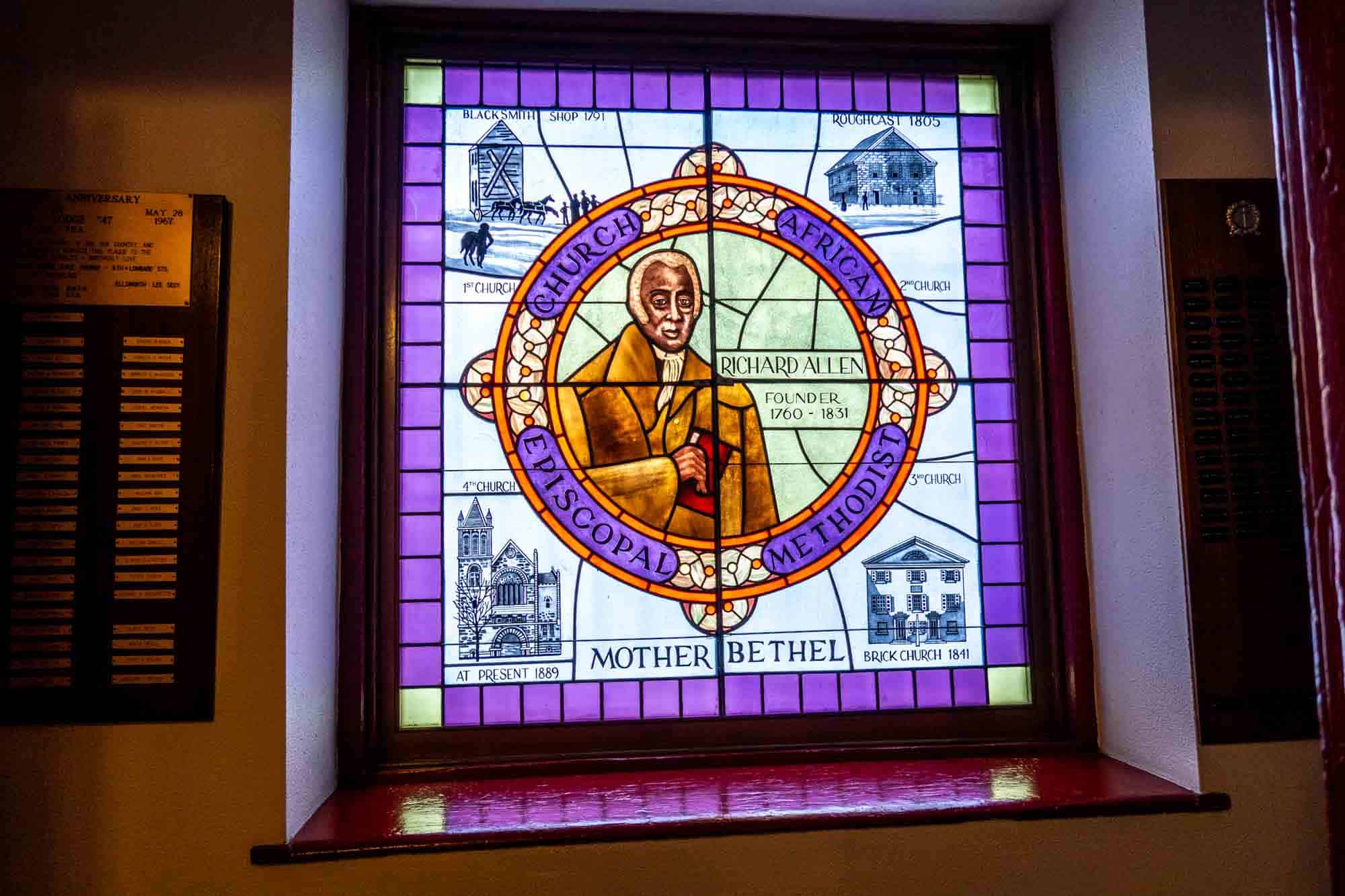
Sharon also explained the history of the current church building, the fourth one on the site. Construction took just one year and was completed for $65,000. When the building was dedicated in 1890, it was envisioned as a big house for God and a precedent for Black churches everywhere—effectively the first Black megachurch, centuries before the term existed.
Artifacts of faith and resistance

While the sanctuary is breathtaking, it’s the basement museum that holds the heart of the church’s history. The artifacts date back to the 1790s and preserve the church’s long legacy. The most striking space here is the crypt with the tomb of Bishop Richard Allen, which was visible as soon as we entered. The engraved large marble slab on top of the tomb tells Allen’s story and the impact of his life.
The original pulpit built and used by Allen stands along with the original pews dating back to the first building that was once on this ground. Beside them is a painting showing Allen preaching to an early congregation. There are also old ballot boxes used for voting on church leadership, financial logs belonging to Allen’s second wife Sara, and photos and documents stretching back 200 years.

Other pieces of church history are also represented. I was surprised to see the long guns used by Black troops who organized to defend Philadelphia during the War of 1812. They’re displayed along with artwork honoring the church’s role in protecting freed and escaped slaves, and memorabilia that reflect the church’s history and struggle for acceptance.
Why you should visit
Mother Bethel AME Church is more than a religious site—it’s a living record of African American faith, leadership, and community building from the 18th century to today. In 1972, Mother Bethel was named a National Historic Landmark, solidifying its place in the nation’s story. But it is far from a static monument and remains an active place of worship and community service. If you’re exploring Philadelphia’s historic attractions, make time for Mother Bethel.
Visiting information
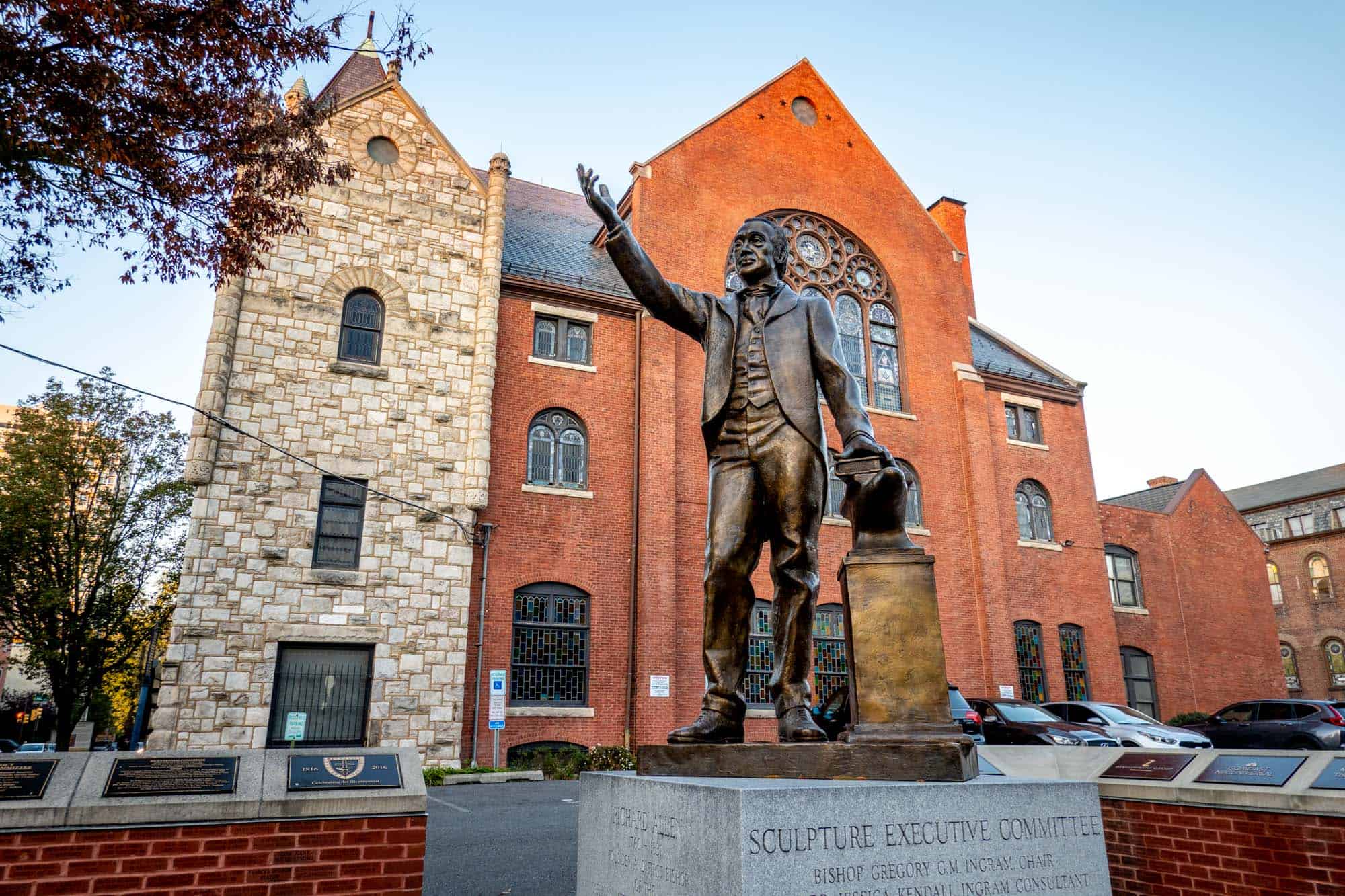
Mother Bethel AME is located at 419 6th Street.
Through August 31, 2025, the museum is open on Saturday from 10am – 3pm and Sundays from 11am – 2pm. Beginning September 1, museum hours will be on the 1st Saturday of the month from 10am – 3pm and every Sunday from 11am to 1pm. Weekday tours are available by request.