
Some posts contain affiliate links, meaning if you book or buy something through one of these links, we may earn a small commission (at no extra cost to you).
I’ve been curious about touring Bryn Athyn Cathedral for years. I’d wandered its peaceful grounds during the pandemic, when local exploring became a regular habit (and when we started this site). But, like so many places at the time, the doors were closed. I remember thinking I’d have to come back someday.
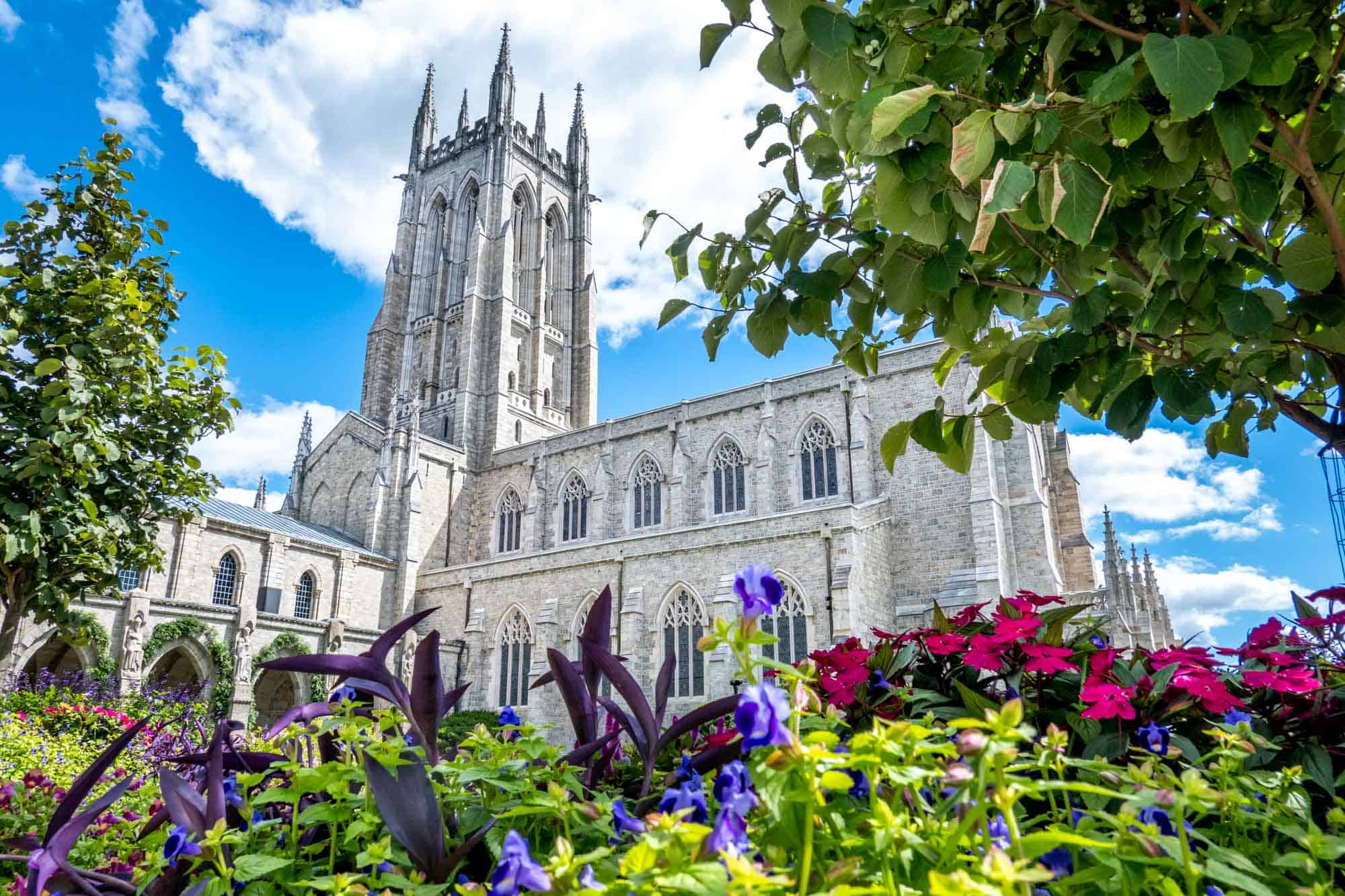
It took a while, but I finally did.
This time, I stepped inside on a guided tour led by Peter, a church member whose knowledge seemed endless. He had so much enthusiasm for the subject that what was supposed to be a 45-minute overview turned into something much more in-depth. It stretched nearly a half-hour longer as he unpacked the meaning behind nearly every detail.
Peter provided a bit of history before we dove into the architecture. The story begins with the General Church of the New Jerusalem (aka the New Church or Swedenborgianism), a faith based on the writings of Emanuel Swedenborg. A Renaissance man from Sweden, Swedenborg felt he was called by God to write a series of divinely inspired books that accompany the Bible.
In the late 1800s, Swedenborg’s follower John Pitcairn purchased the land that established Bryn Athyn, and his son Raymond later led the vision for the cathedral. That vision was an ambitious structure inspired by medieval Europe. Not only did it combine Gothic and Romanesque style, but it was constructed as 14th-century cathedrals were—without nails, screws, or power tools. (Across the lawn, Raymond’s castle-like house is now Glencairn Museum).
Before stepping into the main space, we paused in front of a case filled with dozens of keys that were each ornate and slightly different. They’re made of monel, a copper-nickel alloy that resists rust, and they look like something you’d expect to find in a centuries-old European church. Because it doesn’t rust, monel is used in several places in the building, including intricate (and heavy!) doors.
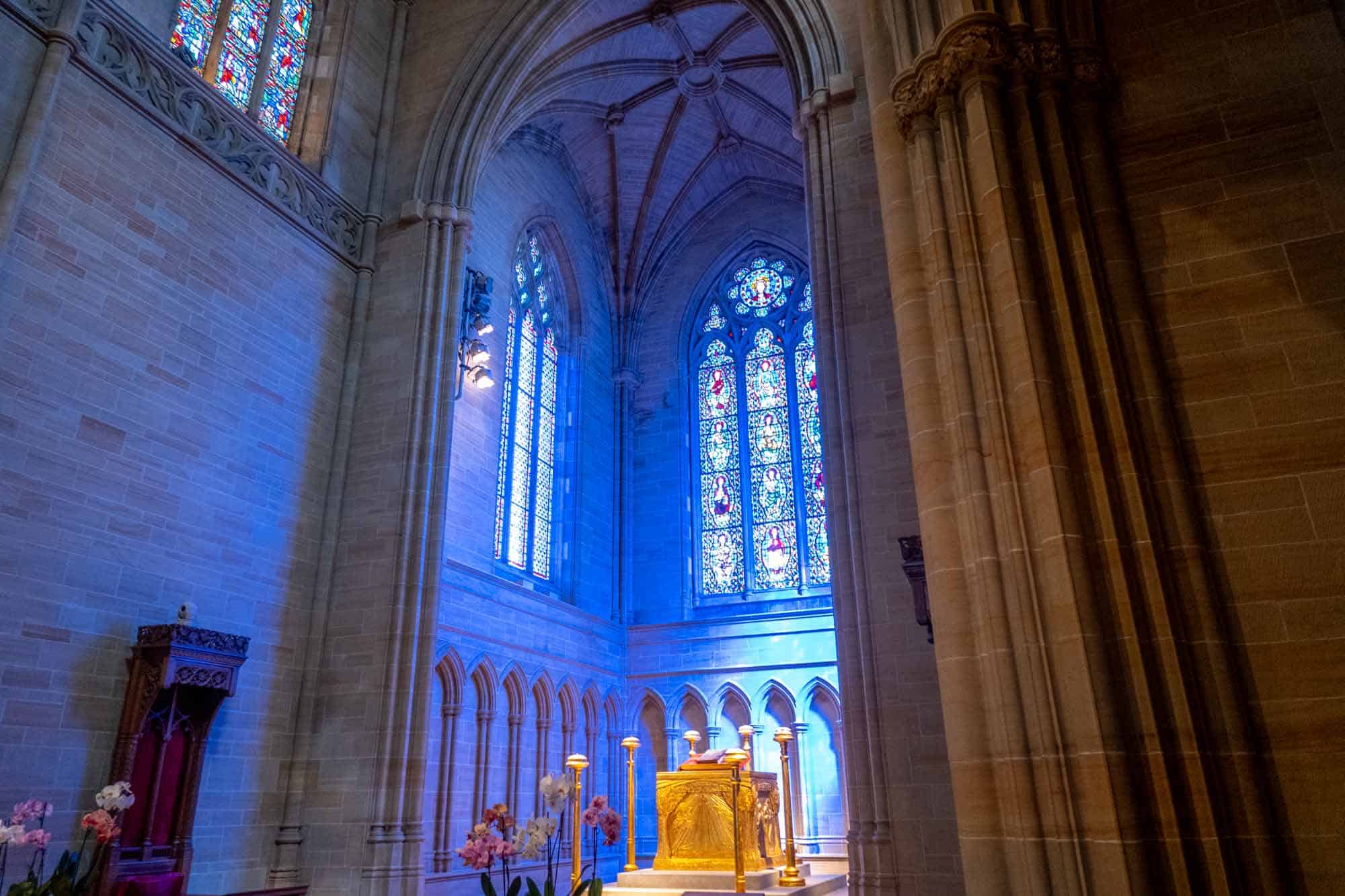
Inside the cathedral’s nave, the first thing I noticed was the bright blue light streaming through the stained-glass windows over the gold altar. The intensity of the color was breathtaking. Despite the hefty stone exterior, the entire space feels bright and open, thanks in part to the white oak that makes up much of the interior.
It was here that Peter pointed out one of the cathedral’s most fascinating building principles, nothing is meant to match because things in nature generally don’t match. The builders intentionally avoided perfect symmetry. No two doorknobs are alike, and windows, arches, and pews vary just a bit.
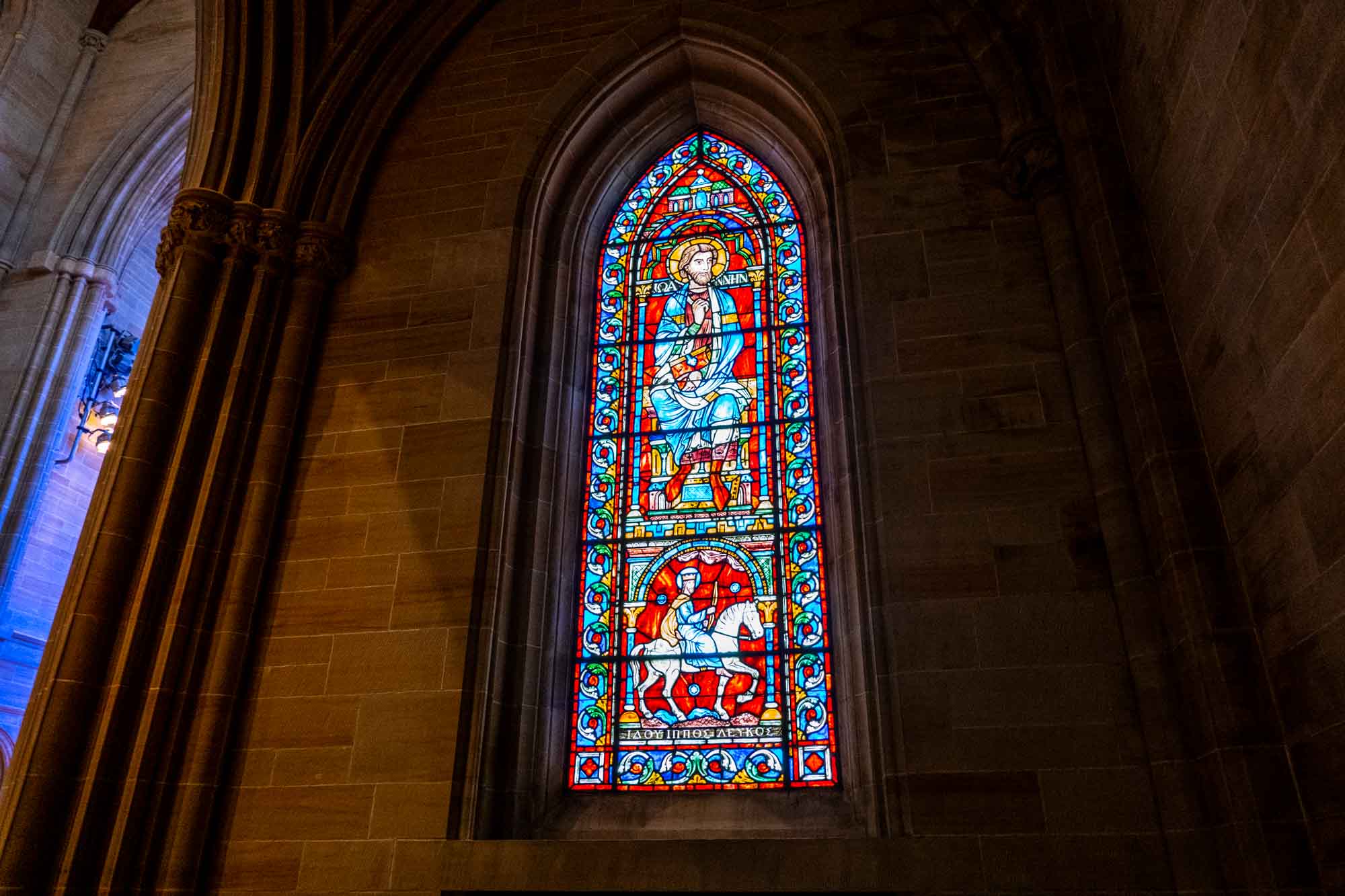
We moved slowly through the nave, stopping at each stained-glass window. One depicting John the Apostle particularly caught my attention. The colors were so rich they almost seemed to glow from within. That, it turns out, was intentional.
Raymond Pitcairn was inspired by the windows at Chartres and Canterbury cathedrals and wanted to recreate their depth of color, but no one had used the technique that created those windows for centuries. The artisans here relearned those lost techniques, producing every piece of glass right in Bryn Athyn. (They also discovered a technique of their own involving hair, but you’ll have to take the tour to hear that story.)
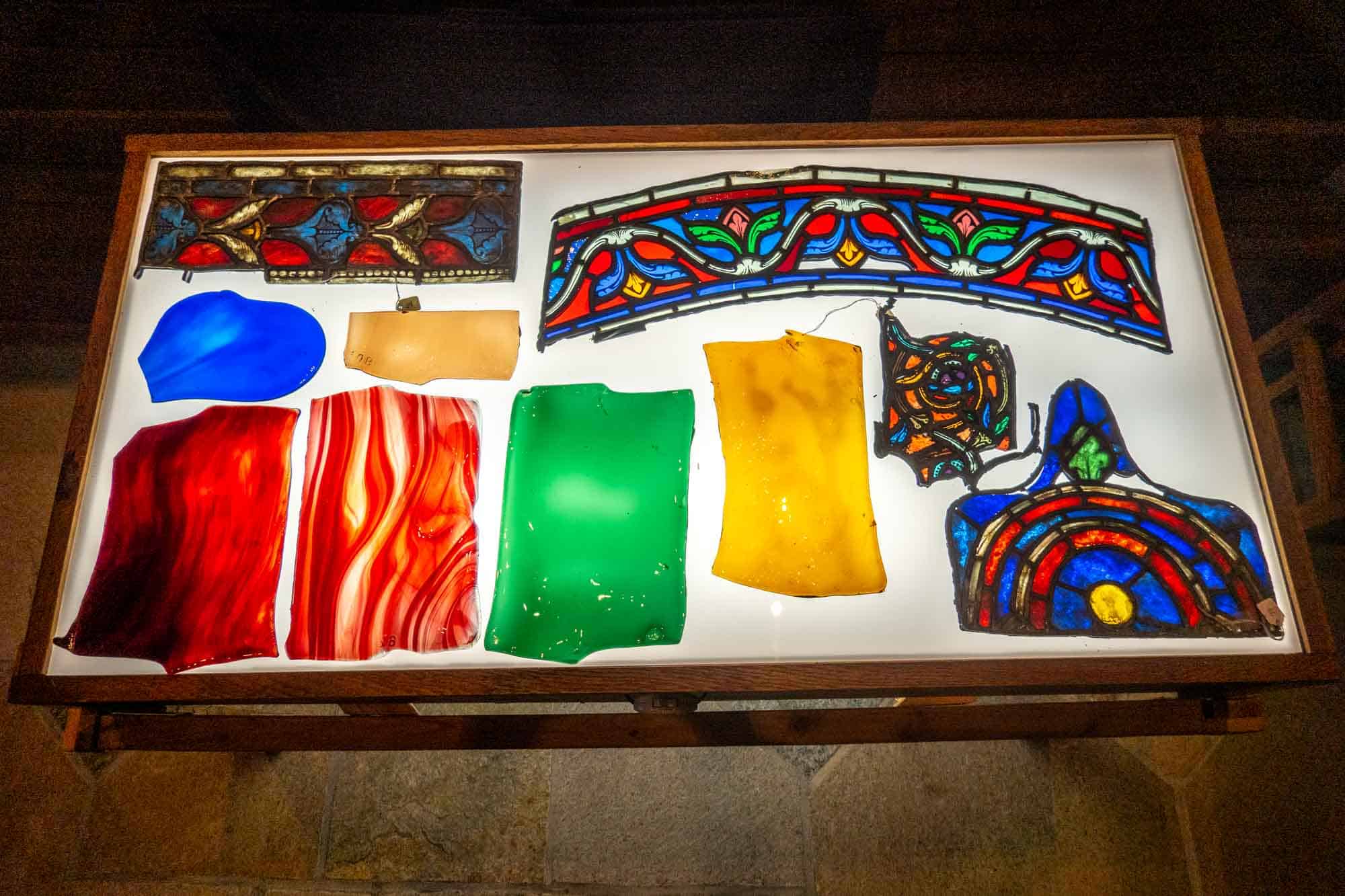
Looking at those windows, it’s hard not to be impressed by the level of dedication and ingenuity that went into the building. Nearly everything used to build the cathedral was made or sourced locally. At one time, the site included workshops for stone masonry, metalwork, carpentry, and glass-making.
We finished in a small side chapel, a more intimate space used for weddings and professions of faith. After the grandeur of the nave, it was a nice space to close in.
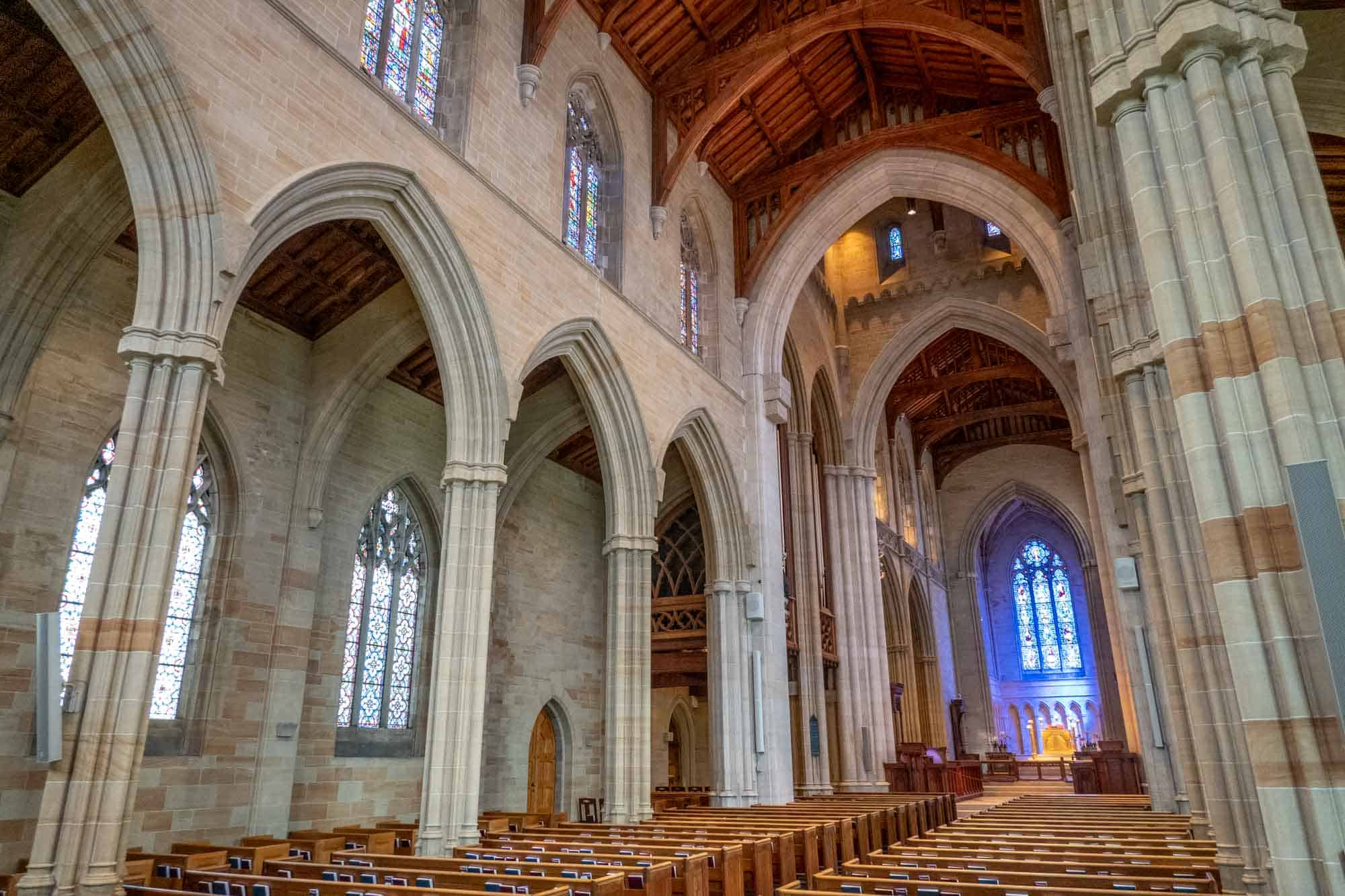
After years of wondering whether the inside of the Bryn Athyn Cathedral matched the grand exterior and grounds, I’m pleased to report that it does. It’s worth a visit for the stained glass and soaring columns alone, but the stories from the guide make the tour even more meaningful.
Visiting information
The cathedral is located at 900 Cathedral Road in Bryn Athyn in Montgomery County. Guided tours are usually available on Tuesday, Wednesday, and Thursday afternoons for a $5 donation.